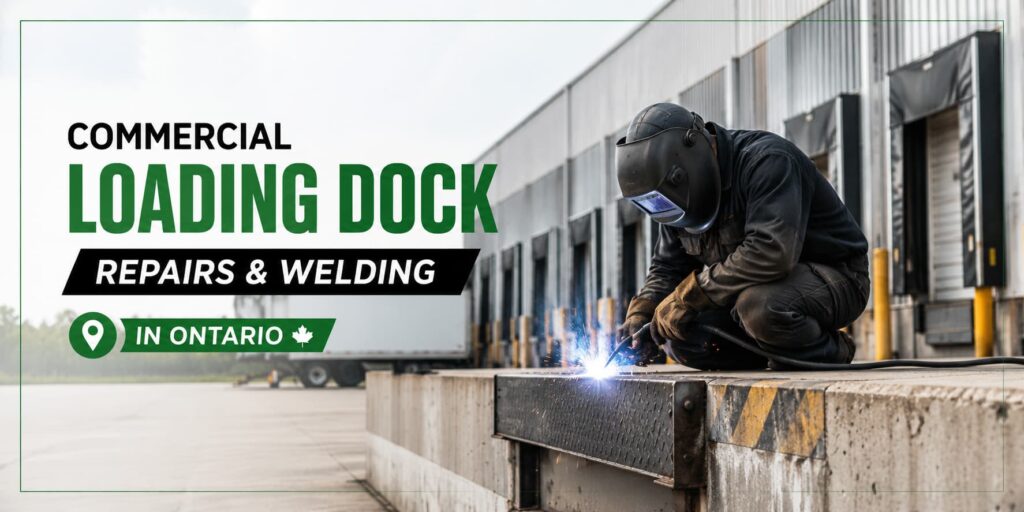
Commercial loading docks are one of the busiest and most heavily used areas in warehouses, distribution centres, manufacturing facilities, and logistics operations across Ontario. Every day, these areas handle constant movement from forklifts, pallet jacks, delivery trucks, trailers, and heavy materials.
With thousands of loading cycles each year, even well-built dock structures experience wear and damage. Small issues such as cracked welds, loose steel components, bent dock plates, or damaged safety barriers can gradually become larger structural problems if they are ignored.
A damaged loading dock is more than a maintenance concern. It can slow down shipping operations, create workplace safety risks, damage equipment, and increase repair costs. Many businesses only contact a welder after a dock component completely fails, but early repairs can often prevent expensive downtime.
Commercial Loading Dock Repairs & Welding in Ontario: Common Problems, Warning Signs, and Repair Solutions
Professional loading dock welding repair in Ontario helps businesses restore damaged steel components, reinforce weak areas, and keep loading operations safe and reliable. Mobile welding services are especially valuable because repairs can often be completed directly at the facility without removing equipment or transporting large structures elsewhere.
This guide explains the most common commercial loading dock problems, warning signs that repairs may be needed, and how professional welding solutions can extend the lifespan of your loading infrastructure.
Why Commercial Loading Docks Develop Structural Problems
Heavy Forklift Traffic
Forklifts are essential for warehouse operations, but repeated impacts and heavy loads place significant stress on dock structures.
Common forklift-related damage includes:
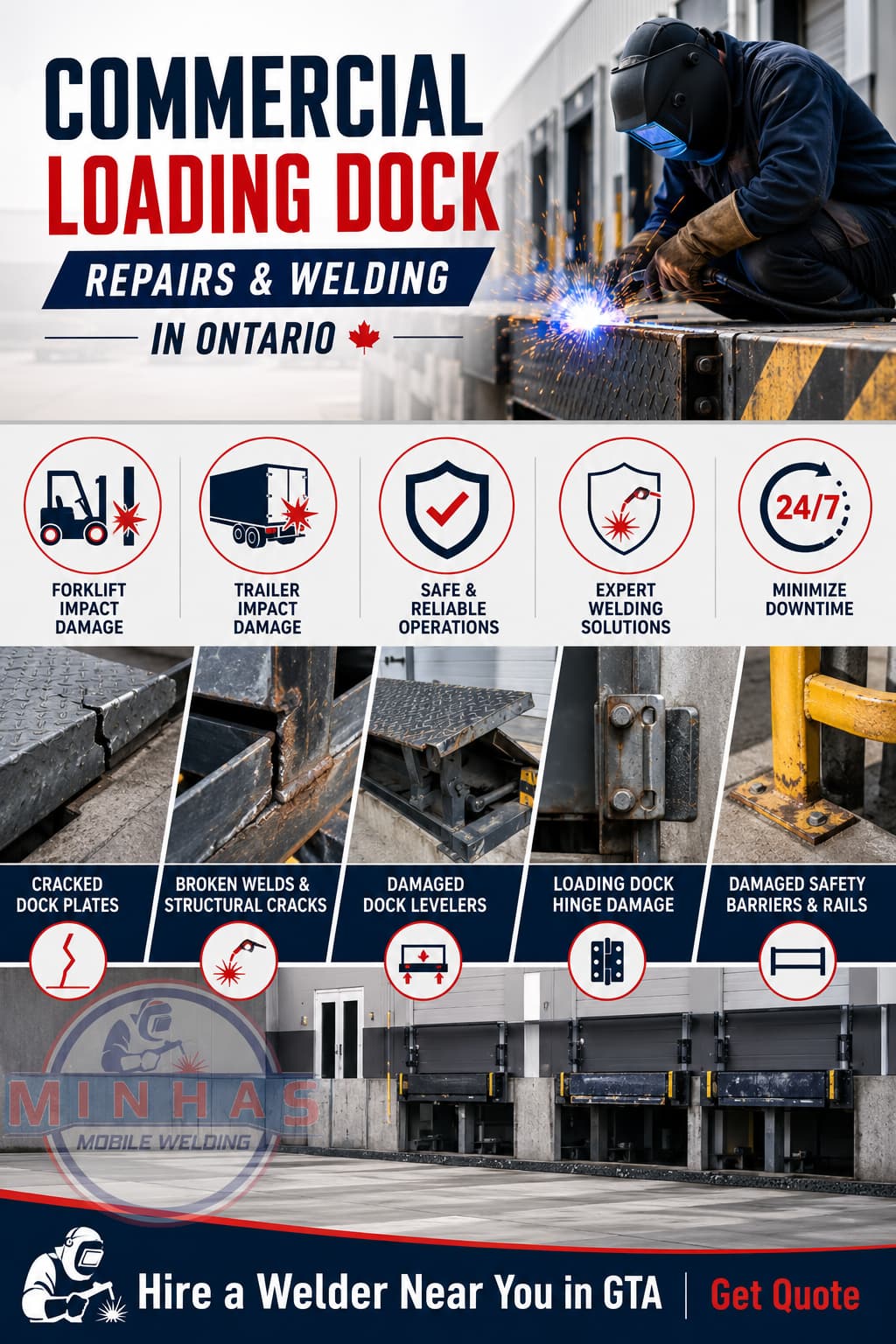
- Bent dock plates
- Cracked support brackets
- Damaged steel edges
- Broken weld joints
- Impact damage around dock bumpers and barriers
Even a minor forklift collision can weaken welded connections. Over time, repeated stress can cause cracks to expand and affect the structural integrity of the dock.
Trailer Impact Damage
Delivery trailers frequently connect and disconnect from loading bays throughout the day.
Incorrect positioning, driver error, or excessive impact during docking can damage:
- Dock bumpers
- Steel frames
- Guide rails
- Safety barriers
- Dock leveler components
Trailer impacts are one of the most common reasons businesses require emergency loading dock welding repairs.
Weather Exposure and Corrosion
Ontario weather creates additional challenges for outdoor loading areas. Snow, freezing temperatures, moisture, and road salt can accelerate corrosion on exposed steel components.
Over time, rust can weaken:
- Welded joints
- Steel plates
- Support frames
- Hinges
- Safety rails
Rust often starts on the surface but can eventually penetrate deeper into the metal, reducing strength and creating safety concerns.
Heavy Freight Loads
Loading docks support thousands of pounds of equipment and materials every day. Repeated loading and unloading cycles create stress on structural components.
Common problems caused by heavy loads include:
- Metal fatigue
- Cracked welds
- Warped steel plates
- Loose connections
- Structural deformation
A dock may continue operating even when damage is developing underneath the surface. Regular inspections help identify these issues early.
Lack of Preventive Maintenance
Many businesses inspect equipment such as forklifts and machinery regularly but overlook loading dock structures.
Without routine checks, small issues can remain unnoticed until they create:
- Equipment damage
- Workplace hazards
- Shipping delays
- Emergency repair costs
A simple inspection schedule can identify worn components before they require major repairs.
Most Common Commercial Loading Dock Problems
Cracked Dock Plates
Dock plates bridge the gap between the warehouse floor and the delivery trailer. They support forklifts, carts, and heavy loads during loading and unloading.
Over time, dock plates may develop:
- Surface cracks
- Bent edges
- Broken weld connections
- Weak support areas
A cracked dock plate creates an uneven transition area that can damage equipment and increase workplace safety risks. Professional welders can often repair damaged dock plates through reinforcement welding or fabrication repairs, depending on the severity of the damage.
Broken Welds and Structural Cracks
Welded connections are critical for maintaining the strength of loading dock structures. Continuous vibration and heavy impacts can cause welds to crack or separate.
Common locations for welding failures include:
- Dock leveler frames
- Steel supports
- Guardrails
- Hinges
- Brackets
- Reinforcement plates
Ignoring cracked welds can allow damage to spread into surrounding steel components.
Damaged Dock Levelers
Dock levelers help create a smooth transition between the warehouse floor and a trailer. When they stop working correctly, loading becomes slower and more dangerous.
Signs of dock leveler damage include:
- Uneven movement
- Difficulty raising or lowering
- Excessive noise
- Visible cracks
- Misalignment
Depending on the condition, repairs may involve welding damaged frames, reinforcing steel components, or replacing worn sections.
Loading Dock Hinge Damage
Hinges experience repeated movement every time a dock component operates. Over time, hinges may become worn, bent, or detached.
Damaged hinges can cause:
- Poor alignment
- Uneven operation
- Increased stress on nearby components
Welding repairs can restore damaged hinge connections and improve the overall reliability of the dock system.
Commercial Loading Dock Warning Signs That Require Repairs
Loading dock damage does not always appear as a major failure. In many cases, small warning signs indicate that structural repairs are needed before the problem affects daily operations.
Facility managers and business owners should regularly inspect loading areas and look for the following issues.
Visible Cracks in Steel Components
Cracks around welded joints, support brackets, dock plates, or frames should never be ignored.
Small cracks can expand due to:
- Forklift traffic
- Heavy freight movement
- Temperature changes
- Continuous vibration
- Trailer impacts
A professional welder can assess whether the damaged area requires simple reinforcement, crack repair, or component replacement.
Unusual Movement or Noise
A loading dock should operate smoothly during normal use. Grinding sounds, excessive movement, or unusual vibrations often indicate damaged or worn components.
Common causes include:
- Loose weld connections
- Damaged hinges
- Bent steel supports
- Worn mechanical components
Addressing these issues early can prevent larger structural failures.
Rust Around Welded Areas
Rust around welds is a common warning sign in Ontario due to exposure to snow, moisture, and road salt.
Rust can weaken steel by reducing material thickness and affecting structural strength. Surface rust may only require cleaning and protective treatment, while deeper corrosion may require cutting out damaged sections and welding new steel.
Uneven Dock Plate Movement
Dock plates should provide a stable connection between the building and trailer. If a plate shifts, bends, or moves excessively during use, it may indicate:
- Structural damage
- Weak support points
- Broken welds
- Metal fatigue
An unstable dock plate creates unnecessary risks for forklift operators and warehouse employees.
Damaged Safety Barriers and Bollards
Safety barriers and bollards protect buildings, equipment, and workers from vehicle and forklift impacts.
Common problems include:
- Bent protective posts
- Cracked welds
- Loose mounting points
- Damaged steel rails
Repairing these components quickly helps maintain workplace safety and prevents further property damage.
Signs Your Loading Dock Needs Immediate Attention
Facility managers should arrange professional inspection or repairs if they notice:
- Cracks spreading around weld joints
- Dock plates bending under normal loads
- Forklifts experiencing difficulty crossing the dock area
- Visible rust affecting structural steel
- Damaged safety rails or bollards
- Dock leveler movement problems
- Repeated equipment damage near the loading area
- Loose or separated steel components
- Unusual sounds during loading operations
Ignoring these warning signs can turn a minor repair into a costly shutdown.
Commercial Loading Dock Welding and Repair Solutions
Every loading dock repair depends on the type and severity of damage. A professional welder will inspect the structure, identify the cause of failure, and recommend the safest repair approach.
Structural Crack Welding
Cracked steel components can often be repaired through professional welding techniques.
The process may include:
- Inspecting the damaged area
- Removing damaged material if required
- Preparing the steel surface
- Welding and reinforcing the affected section
- Testing the repaired area
Proper preparation is essential because welding over damaged or weakened metal may not provide a long-lasting repair.
Dock Plate Reinforcement
Damaged dock plates may require reinforcement welding to restore strength and improve durability.
Depending on the condition, repairs may include:
- Adding reinforcement plates
- Repairing cracked edges
- Strengthening support points
- Replacing severely damaged sections
This type of repair can extend the usable life of existing dock equipment.
Dock Leveler Frame Repairs
Dock leveler systems experience significant stress from repeated forklift movement. Damaged frames, brackets, and mounting points may require welding repairs.
Professional repairs can help restore:
- Proper alignment
- Smooth operation
- Structural stability
Hinge Repairs and Reinforcement
Damaged hinges can affect the movement and safety of loading dock equipment. Welding repairs can restore damaged connections and reinforce weak areas.
Common hinge repair situations include:
- Broken hinge welds
- Bent mounting plates
- Worn connection points
- Cracked support sections
Steel Fabrication for Damaged Components
Some loading dock components may be too damaged for simple repairs. In these cases, custom steel fabrication may provide a better solution.
Fabricated replacement components may include:
- Steel brackets
- Support plates
- Safety rails
- Protective barriers
- Custom reinforcement pieces
Mobile welding services allow these repairs to be completed directly at commercial facilities, reducing equipment transportation and downtime.
Loading Dock Repair vs Replacement: Which Option Makes Sense?
Not every damaged loading dock requires complete replacement. In many cases, professional repairs can restore strength and extend service life.
When Repairs Are Usually Enough
Repairs may be suitable when:
- Damage is localized
- Steel remains structurally sound
- Cracks are limited to specific areas
- Components can be reinforced safely
- The overall dock system remains functional
Examples include repairing cracked welds, replacing damaged brackets, reinforcing dock plates, and repairing safety barriers.
When Replacement May Be Necessary
Replacement may become the better option when:
- Severe corrosion has weakened the structure
- Multiple components continue failing
- Steel deformation affects safe operation
- Repair costs approach replacement costs
- The dock no longer meets operational requirements
A professional inspection helps businesses make informed decisions based on safety, repair costs, and expected lifespan.
Benefits of Addressing Loading Dock Problems Early
Reduce Operational Downtime
A failed loading dock can interrupt shipping schedules and delay deliveries. Preventive repairs help avoid unexpected shutdowns.
Improve Workplace Safety
Damaged dock components increase risks for forklift operators, warehouse employees, and delivery drivers. Proper repairs help maintain safer working conditions.
Extend Equipment Lifespan
Small repairs can prevent damage from spreading and extend the service life of expensive loading infrastructure.
Lower Long-Term Costs
Emergency repairs are often more expensive than scheduled maintenance. Identifying problems early helps businesses control maintenance expenses.
Protect Other Equipment
A damaged dock can affect forklifts, trailers, pallets, and other warehouse equipment. Maintaining the dock protects the entire loading operation.
Why Professional Loading Dock Inspections Matter
Commercial loading docks should be inspected regularly, especially in facilities with high daily traffic.
Industries that benefit from frequent inspections include:
- Warehouses
- Manufacturing plants
- Distribution centres
- Food processing facilities
- Transportation companies
- Retail supply chains
During an inspection, professionals typically evaluate:
- Steel condition
- Weld integrity
- Dock plate strength
- Safety barriers
- Corrosion damage
- Structural alignment
Businesses with heavy loading activity may require more frequent inspections than facilities with occasional deliveries.
Final Thoughts: Protect Your Loading Dock Before Small Problems Become Major Repairs
Commercial loading docks support some of the most important daily operations for Ontario businesses. When these structures experience cracks, corrosion, impact damage, or failed welds, delaying repairs can create unnecessary safety risks and operational challenges.
Regular inspections and professional loading dock welding repair in Ontario help businesses maintain reliable loading operations, prevent costly downtime, and extend the lifespan of their equipment.
Whether your facility needs dock plate reinforcement, structural welding, safety barrier repairs, or emergency mobile welding services, addressing problems early is the best way to protect your investment.
Frequently Asked Questions
Loading dock damage commonly results from forklift impacts, trailer collisions, heavy freight loads, corrosion, repeated use, and lack of maintenance. Over time, these factors can weaken steel components and welded connections.
Yes, many cracked loading dock plates can be repaired through professional welding and reinforcement. The repair approach depends on the location, severity, and overall condition of the steel.
Inspection frequency depends on usage levels and operating conditions. High-volume warehouses and distribution centres may benefit from more frequent inspections, while lower-use facilities may require scheduled annual checks.
Repairs are often effective when damage is limited to specific components such as weld joints, brackets, dock plates, or safety barriers. Replacement may be necessary when corrosion, deformation, or repeated failures affect the overall structure.
The cost depends on factors such as the damaged component, repair complexity, required materials, accessibility, and whether emergency service is needed. A professional inspection is the best way to determine accurate repair requirements. Get a free cost estimate.
Many mobile welding repairs can be completed on-site with proper planning. Businesses can often schedule repairs during slower periods to reduce disruption to warehouse operations.
Industries that rely heavily on loading docks include logistics companies, warehouses, manufacturing facilities, trucking operations, distribution centres, and large commercial properties.
Yes, mobile welders can often complete loading dock repairs directly at the facility. On-site welding reduces transportation requirements and helps businesses restore operations faster.