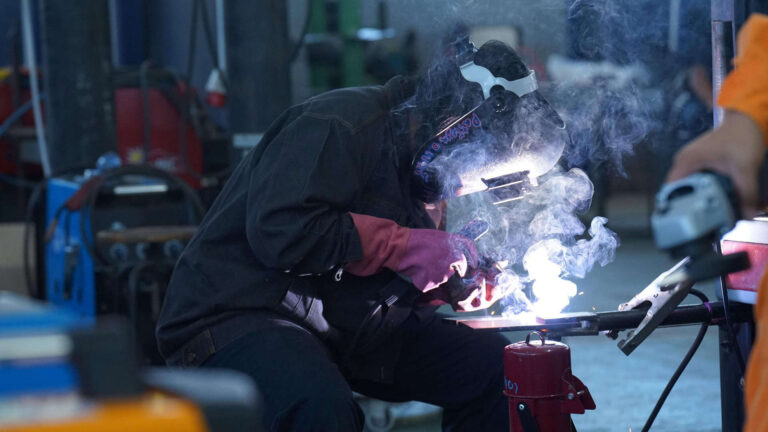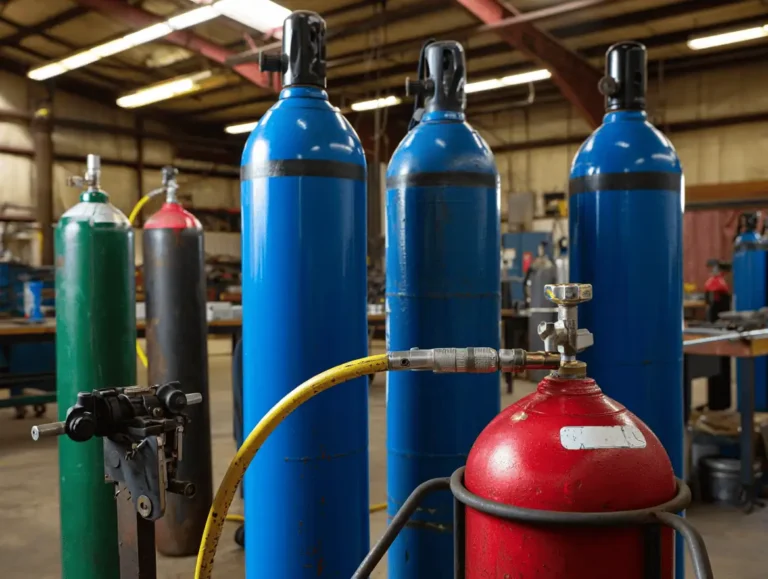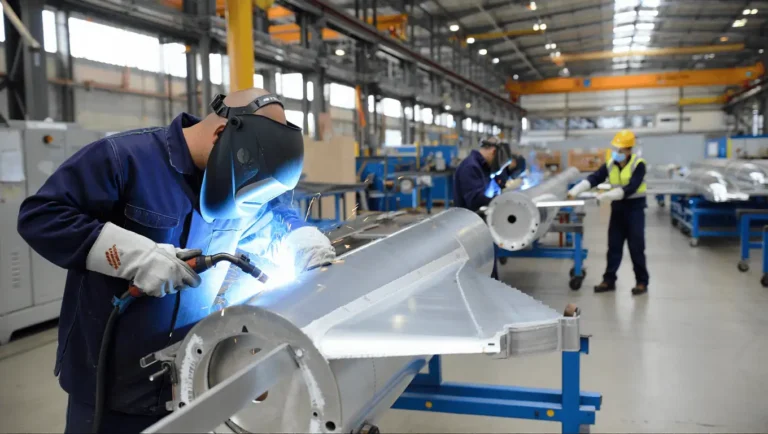
When a vital piece of infrastructure fails in the Greater Toronto Area, the clock starts ticking, loudly. Whether it is a snapped structural beam at a Mississauga manufacturing plant, a cracked hydraulic line on a Brampton construction site, or a broken gate at a downtown Toronto loading dock, downtime is not just an inconvenience; it is a direct hit to your bottom line. In these high-stakes moments, you don’t need a craftsman with a hobby welder in the back of a truck. You need a rapid-response team that combines speed with uncompromised safety standards. Emergency welding is service of restoring structural integrity and operational capability under extreme time constraints.
For businesses across the GTA, from the industrial hubs of Vaughan and Oakville to the high-density commercial zones of Scarborough and Etobicoke, access to certified, mobile welding services isn’t just a maintenance line item; it is a critical component of risk management.
When Does Welding Become an Emergency?
In the industrial and commercial landscape of Ontario, a welding emergency rarely looks like a simple crack. It manifests as a cascade of potential failures. To understand why speed is paramount, we must look at the specific scenarios where waiting for a “regular” shop appointment is not an option.
1. Industrial Equipment Breakdowns
The GTA is the manufacturing heartland of Canada. When a multi-ton press brake in a Scarborough fabrication shop seizes due to a cracked frame, or a conveyor system in a Mississauga distribution center shears a support arm, the production line stops.
- The Cost: According to industry analyses, unplanned downtime in manufacturing can cost mid-to-large facilities anywhere from $5,000 to over $20,000 per hour.
- The Solution: Emergency welding services allows for in-situ repairs. Instead of waiting days to dismantle and ship equipment to a shop near you, certified welders arrive on-site with portable rigs to perform heavy-duty repairs, often getting the line running within hours.
2. Structural Failures & Safety Hazards
Ontario’s fluctuating weather—from ice storms to extreme summer heat—puts immense stress on outdoor structures. A compromised mezzanine railing, a buckling steel support column in a warehouse, or a fractured overhead crane rail poses an immediate safety threat.
In these cases, emergency welding serves a dual purpose: it restores functionality, but more importantly, it mitigates liability. A structural repair performed by a Certified Welding Bureau (CWB) welder ensures that the fix meets the strict safety codes required for commercial insurance and Workplace Safety and Insurance Board (WSIB) compliance.
3. On-Site Infrastructure Repair
The GTA’s infrastructure extends beyond buildings. Consider a gated community in North York with a malfunctioning automated entry arm, or a loading dock in Etobicoke with a rusted-out dock leveler. These “small” failures create big bottlenecks. Emergency mobile welding services address these on-site repairs immediately, preventing security vulnerabilities and logistical delays.
How Minhas Emergency Welding Works in the GTA: Speed Meets Certification
The concept of “emergency welding” is often misunderstood. It is not simply showing up with a generator and a stick welder. In Ontario, legitimate emergency welding providers operate with a strict protocol designed to balance speed with safety.
When you call for an emergency weld in the GTA, a professional service typically follows this structure:
- Immediate Assessment: A rapid intake process identifies the material (steel, aluminum, stainless), the location, and the severity of the structural compromise.
- Mobile Deployment: Technicians in fully-stocked mobile units are dispatched. In the GTA, traffic is a variable. Reputable companies utilize GPS routing and strategic depot locations (often in Peel Region or the 401 corridor) to guarantee a 2-to-4-hour arrival window for critical calls.
- On-Site Safety Protocol: Before striking an arc, the team performs a hazard assessment. This is non-negotiable in Ontario, where fire safety is paramount. Welders bring appropriate fire blankets, extinguishers, and spotters to ensure hot work permits can be fulfilled.
- The Repair: Utilizing processes like Shielded Metal Arc Welding (SMAW) for heavy structural repairs or Metal Inert Gas (MIG) for faster fabrication, the team executes the repair to code.
- Post-Weld Inspection: A true emergency service doesn’t just leave you with a patch. It concludes with a visual inspection, and if required, documentation of the weld certification for your records.
The Gold Standard: CWB Certification
In Ontario, welding on structural components is not a DIY endeavor. The Canadian Welding Bureau (CWB) is the organization that administers welding certification in compliance with CSA Standard W47.1 (for steel) and W47.2 (for aluminum).
If a welder is not CWB-certified, any structural repair they perform is effectively uninsured. For building owners and facility managers, hiring non-certified welders for emergency work risks voiding insurance policies and failing municipal inspections. Always verify CWB certification before authorizing emergency structural repairs.
“In emergency scenarios, the pressure to get the machine running or the gate fixed can sometimes overshadow the need for procedural compliance. However, a repair that isn’t done to CSA W59 standards isn’t a repair—it’s a future failure waiting to happen, often with legal ramifications. Speed is essential, but not at the expense of structural integrity.” — Senior Welding Inspector, GTA Fabrication Sector
The Advantages of 24 x 7 Emergency Welding Services in GTA
For businesses across the GTA, the primary advantage of 24 hr mobile emergency welding is the elimination of logistics. When you rely on a shop-based fabricator, you face a multi-step process: rigging, transportation, shop wait times, transportation back, and re-installation.
Here is a comparison to illustrate the value:
| Feature | Traditional Shop Repair | Mobile Emergency Welding 24/7 |
|---|---|---|
| Logistics | Requires disassembly, rigging, and transport | Performed on-site; no transport needed |
| Downtime | Days to weeks | Hours to one day |
| Certification | Usually CWB certified | CWB certified with portable equipment |
| Scope | Best for bench work or new fabrication | Ideal for in-situ repairs, structural cracks, heavy equipment |
| Availability | 9-5, Monday-Friday | 24/7/365 availability in GTA |
Real-World Applications & Use Cases
To truly understand the value, consider these typical GTA scenarios:
Case Study 1: The Mississauga Distribution Center
A logistics hub in Mississauga experienced a catastrophic failure of a forklift ramp joint during the night shift. The crack created a 4-inch gap, halting all cross-docking operations. With 30 trailers waiting to be unloaded, the facility manager faced a $50,000 loss in late fees.
A mobile emergency welding crew arrived within few hours. Using low-hydrogen welding rods (7018) suitable for structural steel, they beveled the crack, welded the joint back to factory specifications, and ground the surface smooth for forklift traffic. Total downtime: 3.5 hours.
Case Study 2: The Downtown Toronto High-Rise
During a harsh winter freeze, a water main break caused a sinkhole adjacent to a downtown condo’s steel-reinforced parking garage egress. The freeze-thaw cycle had sheared a critical support beam for the overhead door track.
Emergency welders were called to reinforce the track system with gusset plates, allowing the heavy security door to close and secure the building overnight. Because the team was CWB-certified, the building corporation received a certified weld report to submit to their property insurer, streamlining the claim process.
Case Study 3: Brampton Aggregate Plant
A rock crusher at an aggregate plant suffered a massive crack in its main frame. Shipping the 20-ton crusher to a shop was impossible. Mobile heavy-equipment welders used carbon arc gouging to remove the cracked material, preheated the thick steel sections to prevent hydrogen cracking, and performed a full-penetration weld. The site was back in operation within 24 hours, saving the operator from a week-long shutdown.
Safety and Compliance: The Ontario Context
Welding is a regulated activity in Ontario, primarily under the Occupational Health and Safety Act (OHSA) . When hiring an emergency welding service, the provider must be responsible for their own safety (confined space entry, fall arrest, etc.), but the client (property owner or prime contractor) is responsible for ensuring the contractor is qualified.
A reliable emergency welding service will arrive with:
- Valid WSIB Clearance: Protects you from liability if a worker is injured on your property.
- Hot Work Permits: They understand the requirements of local fire departments, especially in high-density areas like Toronto proper.
- Proper Shielding & Grounding: To protect sensitive electronics in modern manufacturing equipment (CNC machines, PLCs) from stray welding currents.
Statistics on Industrial Reliability
According to the Ontario Ministry of Labour, Immigration, Training and Skills Development, equipment failure is consistently listed among the top three causes of critical injuries in the industrial sector.
Furthermore, the Fabricators & Manufacturers Association reports that reactive maintenance (emergency repairs) costs 2 to 3 times more than preventive maintenance. However, when the failure occurs, a fast, certified response is the only way to cap the financial damage.
Why the GTA Requires a Different Approach
The Greater Toronto Area presents unique logistical challenges. Traffic congestion on the 401, 404, and QEW means that a “local welder” might be hours away during peak times.
Furthermore, the diversity of industry—from automotive plants in Oakville to pharmaceutical labs in Mississauga and high-tech manufacturing in Markham—requires a versatile skill set.
Emergency welding providers that thrive in the GTA invest in:
- Fleet Diversity: Light trucks for tight downtown alleys; heavy-duty rigs for industrial yards.
- Multi-Process Capability: Ability to weld aluminum (for food-grade equipment), stainless steel (for pharmaceutical/hygienic lines), and high-strength alloys (for heavy equipment).
- Linguistic & Technical Communication: The ability to translate technical welding jargon into actionable business terms for facility managers and plant owners.
Wrapping up
In the fast-paced industrial and commercial environment of the GTA, breakdowns are inevitable. How you respond to them is what separates a minor interruption from a catastrophic business disruption. Emergency welding is not just about melting metal; it is about rapid problem-solving, certified expertise, and a deep understanding of Ontario’s stringent safety landscape.
When a structural failure threatens your operations, safety, or revenue, you need a partner who combines the speed of a mobile unit with the integrity of a certified shop. You need a service that doesn’t just fix the immediate crack but ensures the repair will hold up to the demands of your industry and the scrutiny of your insurer. Don’t let downtime dictate your day.
Ready to get your operation back on track?
Frequently Asked Questions (FAQ)
What actually qualifies as a "welding emergency"?
A welding emergency is any situation where a structural failure, equipment breakdown, or safety hazard requires immediate repair to prevent injury, significant financial loss, or extended operational downtime.
Common examples include:
- A snapped structural beam or support column compromising building safety
- Heavy machinery (excavators, forklifts, conveyor systems) rendered inoperable by a critical crack or break
- Broken security gates, bollards, or loading dock equipment creating security or access issues
- Pipeline or pressure vessel leaks requiring immediate containment
- Overhead crane rail failures posing imminent safety risks
If the repair can wait until regular business hours without risking safety or costing your operation thousands in downtime, it is not an emergency. When in doubt, a quick call to a reputable service provider near you can help determine the urgency.
Are mobile welders in the GTA certified, and why does that matter?
Not all mobile welders are created equal. In Ontario, certification through the Canadian Welding Bureau (CWB) is the gold standard for structural and industrial welding. CWB certification ensures that the welder has passed rigorous practical and theoretical tests and that their work complies with CSA Standards (W47.1 for steel, W47.2 for aluminum) .
Why this matters to you:
- Insurance Compliance: Many commercial insurance policies require that structural repairs be performed by CWB-certified welders. Non-certified work can void your coverage.
- Liability Protection: If a non-certified weld fails and causes injury or property damage, you could be held liable.
- Municipal Code: Building inspections often require proof that repairs meet CSA standards.
When hiring an emergency welding service near you, always ask: "Are your welders CWB-certified, and can you provide certification records for the repair?" A reputable welding company will answer yes without hesitation.
Can you weld on-site without taking the equipment to a shop?
Yes—this is the entire premise of mobile emergency welding. A fully-equipped mobile welding truck carries everything needed to perform professional-grade repairs on your site:
- Diesel-powered welding machines (capable of stick, MIG, and TIG processes)
- Generators for self-contained power
- Oxygen/acetylene torches for cutting and preheating
- Carbon arc gouging equipment for crack removal
- A full inventory of filler metals (rods, wire) for steel, stainless, aluminum, and specialty alloys
- Fire safety equipment (blankets, extinguishers) and PPE
On-site welding eliminates the costly and time-consuming process of dismantling, transporting, and reinstalling equipment. For large machinery or structural components that cannot be easily moved, mobile welding is often the only practical solution.
How much does emergency welding cost in 2026 the GTA?
Emergency welding services typically involve several cost components, including mobilization and travel, on-site labor, materials such as filler metals and gases, and any after-hours or weekend service considerations.
While emergency rates are generally higher than scheduled shop work, they are often far less expensive than the cost of extended downtime. Prompt repairs can prevent prolonged operational disruptions and costly delays.
Always request a clear estimate before authorizing work. Reputable providers will give a transparent breakdown quote of labor, materials, and any additional service requirements based on your job description.
How do I know if a repair is safe to use after emergency welding?
A professional emergency welding service does not simply weld and leave. A proper emergency repair includes:
- Visual inspection: The welder examines the finished weld for surface defects such as undercut, porosity, or cracking.
- Dimensional verification: For structural or alignment-critical repairs, measurements are taken to ensure the component is within tolerance.
- CWB documentation: Upon request, certified welders can provide a weld log or certification report detailing the materials used, the welding procedure, and the inspector's findings.
- Post-repair guidance: A good service will advise you on any cure time (if preheating or post-heating was involved) and whether the repair requires inspection by a third-party engineer before returning to full service.
For critical structural repairs, some clients opt for non-destructive testing (NDT) methods such as magnetic particle inspection or dye penetrant testing. While this is typically an additional service, a full-service emergency welding provider can coordinate it or recommend when it is necessary.
Still have questions about your specific situation? A quick call to our dispatch team can give you clarity on response times, certification requirements, and next steps—no obligation, just straight answers.