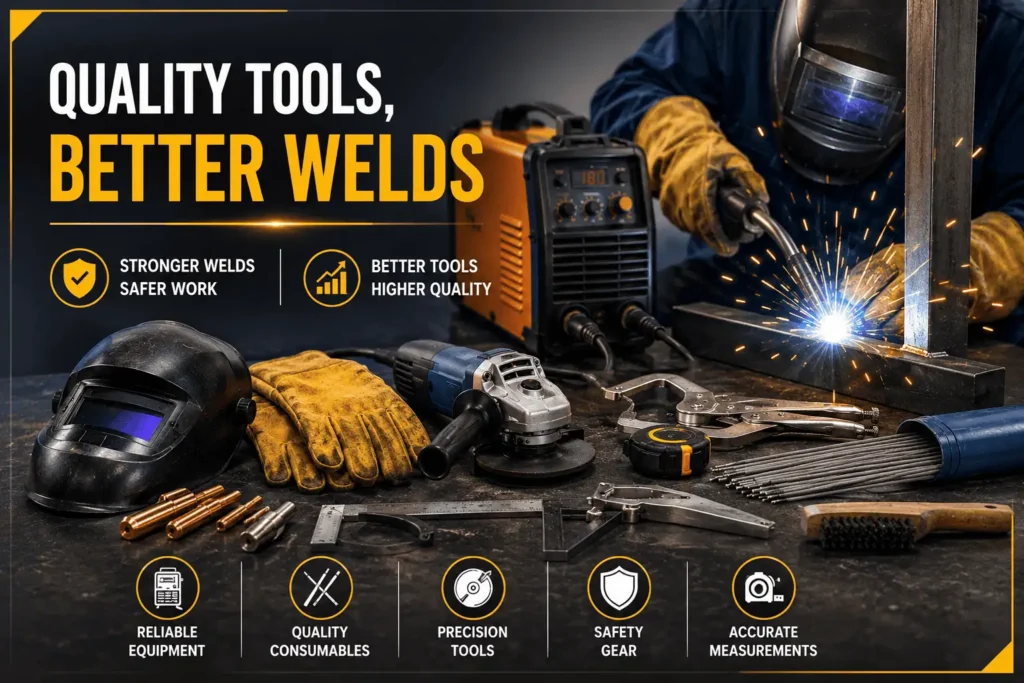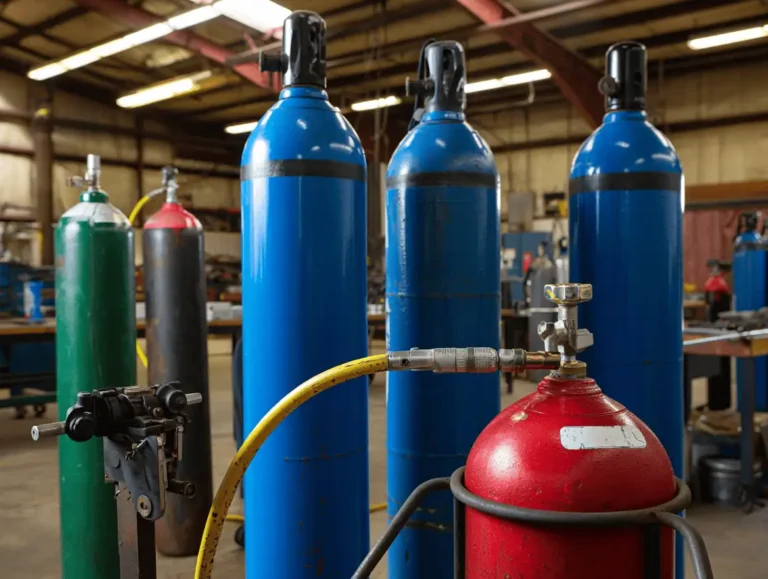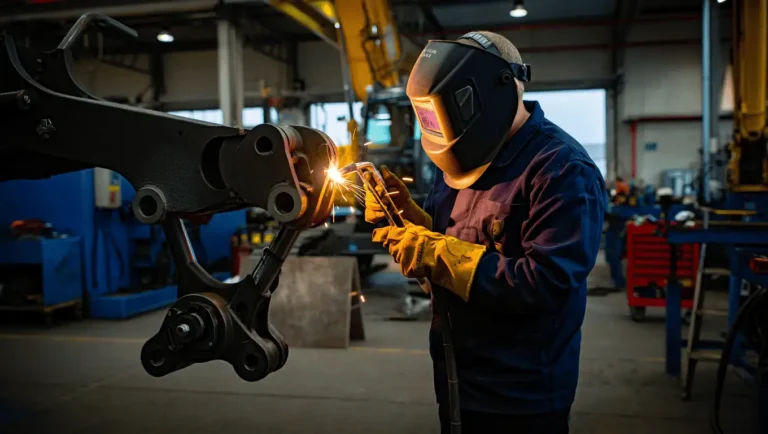
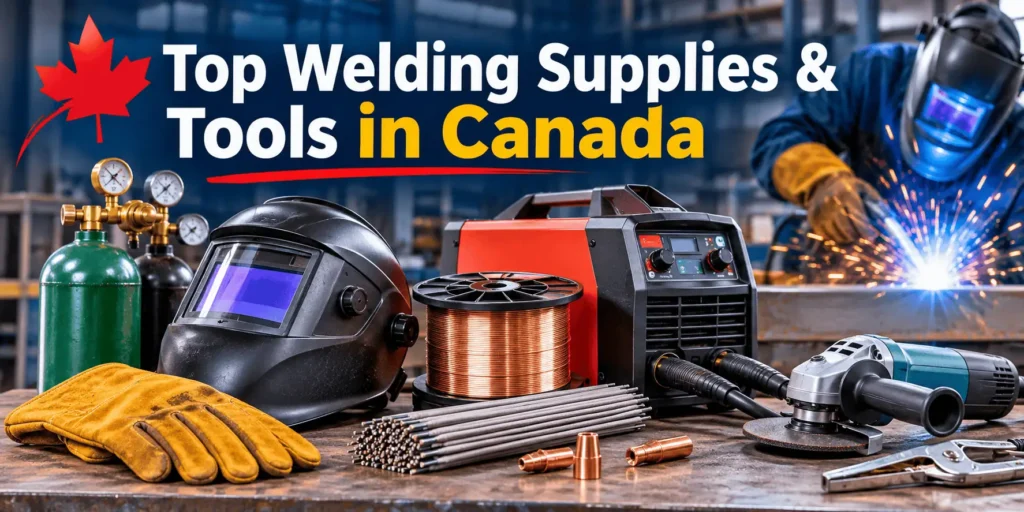
Choosing the right welding supplies and tools affects more than the appearance of a finished weld. The equipment you use influences weld strength, productivity, material compatibility, workplace safety and long-term operating costs. Whether you run a fabrication shop, handle industrial repairs, work on construction sites or weld as a hobby, buying the right equipment can make a significant difference.
Welding Supplies and Tools in Canada: A Complete Guide for 2027 and Beyond
The best welding supplies in Canada depend on the materials you work with, the welding process you use and the conditions in which you operate. A professional fabricator joining structural steel needs a different equipment setup from someone repairing an aluminium trailer or working with stainless steel components.
As the Canadian welding industry moves towards 2027 and beyond, equipment selection will also involve new considerations. Inverter technology, digital controls, automation, portable welding systems and improved fume extraction are influencing how fabrication businesses approach their work.
This guide covers the essential welding machines, consumables, hand tools, accessories and safety equipment worth considering. It also explains how to evaluate quality, understand Canadian certification requirements and build an equipment inventory that supports reliable welding work.
What Makes Welding Supplies Worth Buying in Canada?
Not every welding product suits every application. A machine that performs well for light fabrication may struggle with demanding industrial work. Similarly, an electrode suitable for one steel grade may not meet the requirements of another material or structural application.
Before purchasing welding supplies, evaluate these factors.
1. Compatibility with your welding process
Start by identifying whether your work requires MIG, TIG, stick or flux-cored welding. Each process uses different machines, consumables, accessories and operating parameters.
2. Material compatibility
Consider the metals you regularly weld. Mild steel, stainless steel and aluminium have different welding requirements. Filler materials, shielding gases, electrode types and heat settings must match the application.
3. Equipment duty cycle
A welding machine’s duty cycle indicates how long it can operate at a specified output within a 10-minute period without exceeding its thermal limits. For example, a machine rated for a 40% duty cycle at a particular amperage can weld for four minutes and requires six minutes of cooling within that 10-minute period. Always compare duty-cycle ratings at the output you expect to use.
4. Power supply requirements
Check the machine’s input voltage, phase requirements, amperage draw and available electrical supply. A portable machine designed for a standard workshop outlet may not deliver the same output as an industrial three-phase unit.
5. Replacement parts and technical support
Consumables such as contact tips, liners, nozzles and tungsten electrodes require regular replacement. Check their availability before purchasing equipment. A machine becomes less useful if compatible replacement parts are difficult to source.
6. Certification and documentation
For regulated fabrication, equipment specifications and consumable certifications matter. Confirm that the selected products meet the applicable welding procedure, project specifications and Canadian standards.
A low purchase price should never outweigh compatibility, reliability and compliance.
Essential Welding Machines and Equipment
A welding machine is the foundation of most welding jobs. The right choice depends on the type of metal, material thickness, joint design, production requirements and working environment.
1. MIG Welding Machines
MIG welding, technically known as Gas Metal Arc Welding (GMAW), uses a continuously fed wire electrode to create an electric arc. Shielding gas protects the molten weld pool from atmospheric contamination. MIG welding machines are popular in fabrication shops because they offer relatively high welding speeds and are suitable for many steel and aluminium applications when correctly configured.
What to look for when buying a MIG welder:
- Output amperage range suited to your material thickness.
- Adjustable voltage and wire-feed speed.
- Suitable wire-feed system and drive rolls.
- Compatibility with solid and flux-cored wire where required.
- Appropriate shielding gas connections and regulator.
- Duty cycle suitable for production requirements.
- Spool-gun compatibility for aluminium work, if needed.
MIG welding is particularly useful for repetitive fabrication, frames, brackets, gates, railings and general metalwork. However, outdoor conditions require additional consideration. Wind can disperse shielding gas and expose the weld pool to atmospheric contamination. Flux-cored welding may be a more suitable option in some outdoor environments, depending on the wire classification and procedure. For readers interested in the process, Minhas Mobile Welding explains its MIG welding services.
2. TIG Welding Machines
TIG welding, also known as Gas Tungsten Arc Welding (GTAW), uses a non-consumable tungsten electrode to produce the arc. A separate filler rod can be added when the joint requires additional material. TIG machines provide precise control over heat input and weld puddle formation. They are commonly used for stainless steel, aluminium and other applications where weld appearance and process control matter.
Important purchasing considerations include:
- AC/DC output for the intended materials.
- Adjustable amperage and pulse controls.
- High-frequency or lift-arc starting options.
- Suitable torch and consumable compatibility.
- Gas-flow control and post-flow settings.
- Foot-pedal or torch-control compatibility.
AC TIG capability is particularly important for conventional aluminium TIG applications. DC TIG is commonly used for stainless steel and mild steel. TIG welding generally requires more operator control than MIG welding. It may also take longer, especially when working on thicker materials or production jobs.
3. Stick Welding Machines
Stick welding, or Shielded Metal Arc Welding (SMAW), uses a flux-coated consumable electrode. The electrode creates the arc and provides filler metal while its coating generates shielding and slag. Learn more about stick welding and arc welding services. Stick welding remains useful for construction, maintenance, structural steelwork and outdoor repairs.
Look for machines with:
- Adjustable amperage.
- Compatibility with the required electrode classifications.
- Appropriate input voltage.
- Suitable duty cycle.
- Arc-force and hot-start controls, where useful.
- Thermal overload protection.
One major advantage is that stick welding does not require an external shielding gas supply. This makes it practical for many outdoor applications. However, electrode selection, moisture control, joint preparation and slag removal remain important. The correct electrode must match the base material, welding position and applicable procedure.
4. Flux-Cored Welding Equipment
Flux-Cored Arc Welding (FCAW) uses a continuously fed tubular wire containing flux. Depending on the wire classification, the process may require external shielding gas or operate without it.
Gas-shielded flux-cored welding is common in fabrication and production environments. Self-shielded flux-cored wire can be useful for outdoor work because it does not rely on an external shielding gas supply.
When choosing flux-cored equipment, consider wire diameter, feed capacity, polarity requirements, wire classification and the machine’s output range.
Do not assume every flux-cored wire is suitable for outdoor or structural welding. Follow the manufacturer’s specifications and the applicable welding procedure.
5. Multi-Process Welding Machines
Multi-process machines combine two or more welding processes in one unit. Depending on the model, they may support MIG, TIG, stick or flux-cored welding.
They can be useful for smaller fabrication businesses, maintenance teams and contractors who work with different materials and job requirements.
However, a multi-process machine is not automatically the best choice for every professional operation.
Check whether its output, duty cycle, wire-feed performance and process controls meet your actual workload. A dedicated industrial machine may be more suitable for continuous production or specialized applications.
6. Plasma Cutters
Plasma cutters use an electrically conductive gas to cut through electrically conductive metals. They are widely used for cutting steel, stainless steel and aluminium. For a closer comparison, see Plasma Cutter vs Oxy-Fuel: Which Tool Is Right for You?.
A suitable plasma cutter can improve material preparation and reduce the time required to separate metal components.
Important features include:
- Cutting capacity for the material thickness.
- Recommended production cutting capacity, not just maximum severance capacity.
- Input power requirements.
- Consumable availability.
- Air compressor requirements and air quality.
- Torch design and cable length.
- CNC compatibility, if automated cutting is planned.
Plasma cutting is often faster and more convenient than mechanical cutting for suitable applications. However, cut quality depends on material thickness, amperage, travel speed, torch distance and air quality.
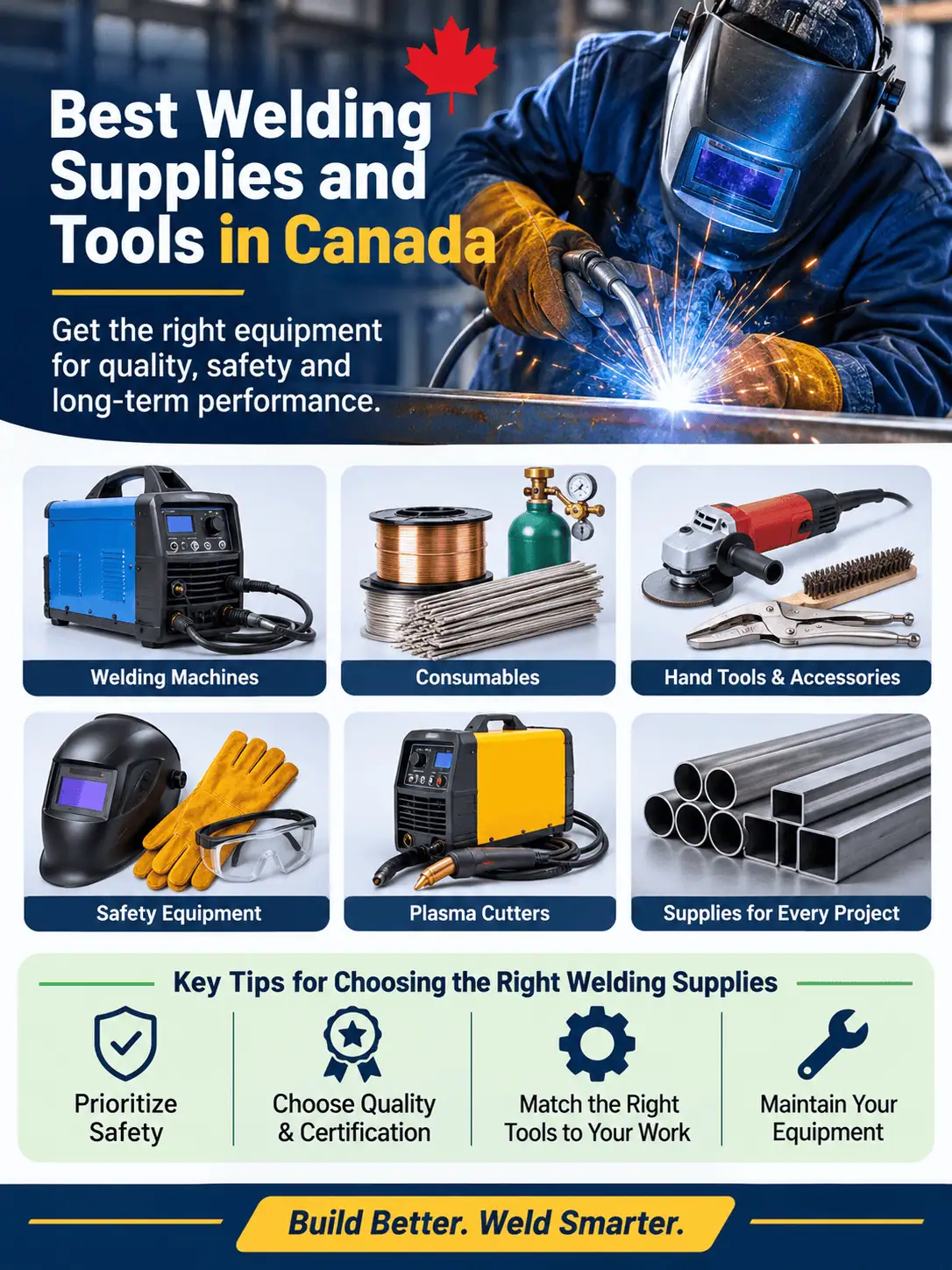
Best Welding Consumables for Professional and Workshop Use
Welding consumables directly influence the quality and consistency of a welded joint. Even a well-maintained welding machine cannot compensate for an incorrectly selected electrode, filler metal or shielding gas.
The following supplies deserve attention when building a welding inventory.
Welding Electrodes
Stick welding electrodes contain a metal core and a flux coating. Different classifications offer different mechanical properties, operating characteristics and welding positions.
For example, E6010, E6011, E6013 and E7018 electrodes serve different applications. They are not interchangeable simply because they fit the same electrode holder.
Consider:
- Base metal composition.
- Required tensile strength.
- Welding position.
- Joint preparation.
- Applicable welding procedure.
- Electrode storage and moisture-control requirements.
Low-hydrogen electrodes require particular attention to storage and handling. Moisture exposure can affect weld quality and increase the risk of hydrogen-related cracking in susceptible applications.
MIG Welding Wire
MIG welding wire is available in different compositions, diameters and classifications.
For carbon steel fabrication, ER70S-6 is a commonly used solid wire classification. Other wire types are available for stainless steel, aluminium and specialized applications.
When purchasing MIG wire, check:
- Wire classification and mechanical properties.
- Diameter compatibility with the feeder.
- Base metal compatibility.
- Shielding gas requirements.
- Welding position and transfer mode.
- Manufacturer recommendations.
Wire diameter also affects current requirements and deposition behaviour. A smaller wire may suit thinner materials, while larger diameters can support higher deposition rates in suitable applications.
TIG Filler Rods and Tungsten Electrodes
TIG welding requires filler rods when additional metal is needed to complete the joint.
Filler metal selection depends on the base material, joint requirements and intended service conditions.
Tungsten electrodes also come in different compositions. Their suitability depends on the welding process, current type, amperage and electrode preparation.
Keep filler materials clean and dry. Contaminated rods and tungsten electrodes can contribute to weld defects.
Shielding Gases
Shielding gases protect the weld pool from atmospheric contamination. The correct gas depends on the metal, welding process, filler material and desired arc characteristics.
| Gas or mixture | Common application |
|---|---|
| Pure argon | TIG welding and aluminium MIG welding |
| Argon/CO₂ mixtures | MIG welding of carbon steel |
| Pure CO₂ | Certain carbon steel MIG applications |
| Argon/helium mixtures | Selected aluminium and non-ferrous applications |
| Argon/oxygen mixtures | Specific steel and stainless steel MIG applications |
| Specialty gas mixtures | Specific alloys and qualified procedures |
For example, C25 contains 75% argon and 25% carbon dioxide. It is commonly used for short-circuit MIG welding of carbon steel. However, the gas mixture must match the wire classification and transfer mode. A mixture suitable for one process may not produce the required results in another. Check this useful guide covering essential welding gases for Ontario fabrication shops.
Welding Nozzles, Contact Tips and Liners
These smaller components are easy to overlook, but they affect wire feeding, electrical transfer and shielding gas delivery.
Keep suitable replacement stock for:
- MIG contact tips.
- Gas nozzles.
- Diffusers.
- Wire liners.
- Drive rolls.
- Torch necks and consumable assemblies.
- TIG collets and ceramic cups.
- Tungsten electrodes.
A worn contact tip can cause inconsistent electrical contact. A damaged liner can create feeding problems. A partially blocked nozzle can disrupt shielding gas coverage.
Regular inspection and timely replacement help prevent avoidable interruptions.
Grinding and Cutting Consumables
Grinding and cutting discs support metal preparation, weld cleanup and finishing.
Choose discs based on the grinder, material and operation. Check the maximum rated rotational speed and ensure it meets or exceeds the grinder’s operating speed.
Use separate grinding accessories for stainless steel where contamination from carbon steel could affect corrosion resistance.
Never use a damaged, expired or incorrectly rated abrasive disc.
Essential Welding Hand Tools and Fabrication Accessories
A reliable welding setup needs more than a machine and consumables. Preparation, positioning, measurement and finishing tools also influence the quality of the finished work.
Welding Clamps and Fixtures
Clamps hold workpieces in position while the welder prepares and completes a joint.
Useful options include:
- C-clamps.
- F-clamps.
- Locking pliers.
- Welding magnets.
- Angle clamps.
- Pipe clamps.
- Dedicated fabrication fixtures.
Proper clamping helps control alignment and movement. It can also reduce distortion caused by uneven heating and cooling. For repetitive fabrication, dedicated fixtures can improve consistency and reduce setup time.
Angle Grinders
Angle grinders are essential for cutting, grinding, bevel preparation and surface cleaning. Select a angle grinder based on disc diameter, power rating, ergonomics and intended use.
Keep suitable abrasive accessories available for different operations. Use the correct disc guard and handle, and inspect the disc before every use.
Welding Gauges and Measuring Tools
Accurate measurement helps ensure joints meet drawing requirements and fabrication tolerances.
Useful tools include:
- Fillet weld gauges.
- Vernier callipers.
- Steel measuring tapes.
- Combination squares.
- Straight edges.
- Levels.
- Bevel gauges.
- Magnetic levels.
Fillet weld gauges are particularly useful for checking weld dimensions during inspection. However, visual measurement alone cannot establish internal weld quality or prove that a joint meets every applicable acceptance criterion.
Wire Brushes and Chipping Hammers
These tools remove slag, loose scale and surface contamination.
Use brushes suited to the base material. A brush previously used on carbon steel can introduce contamination when used on stainless steel.
Chipping hammers help remove slag from processes that produce it, particularly stick welding and certain flux-cored applications.
Welding Tables and Positioners
A stable welding table provides a secure working surface. Fixture holes, clamps and modular accessories can make positioning easier.
Welding positioners can also help rotate or position components to improve access and maintain suitable welding positions.
For businesses handling repetitive or complex fabrication, these tools can improve workflow and consistency.
Welding Safety Equipment Every Canadian Welder Needs
Safety equipment should be part of the initial purchasing decision, not an afterthought. Welding exposes workers to intense light, ultraviolet radiation, sparks, hot metal, fumes, gases, noise and electrical hazards. The appropriate protection depends on the process, material, working environment and exposure assessment.
Auto-Darkening Welding Helmets
Auto-darkening helmets automatically adjust the filter shade when the welding arc starts.
Look for:
- Appropriate filter shade range.
- Reliable arc sensors.
- Suitable switching performance.
- Clear viewing area.
- Adjustable headgear.
- Replaceable cover lenses.
- Compatibility with the welding process.
A larger viewing area can improve visibility, but optical clarity and proper fit matter just as much. For more buying considerations, read this guide to welding helmets.
Welding Gloves
Welding gloves protect hands from heat, sparks and contact with hot materials. Choose gloves according to the process and the level of dexterity required. TIG gloves generally prioritize flexibility and control. MIG and stick welding gloves often provide more insulation and heat protection.
Check stitching, material condition and fit regularly. Replace gloves when they become damaged or lose their protective properties.
Flame-Resistant Clothing
Welding clothing should protect exposed skin from sparks, hot metal and ultraviolet radiation.
Useful protective clothing includes:
- Flame-resistant jackets.
- Welding sleeves.
- Leather aprons.
- Flame-resistant trousers.
- Welding caps and head coverings.
- Appropriate protective footwear.
Avoid synthetic clothing that can melt when exposed to heat. Keep clothing clean and free from oil, grease and other combustible materials.
Respirators and Welding Fume Extraction
Welding fumes contain fine particles and gases. Their composition depends on the base metal, filler material, welding process and surface coatings.
For example, welding galvanized steel can generate zinc oxide fumes. Stainless steel welding may involve exposure to chromium and nickel compounds.
The appropriate controls depend on the actual exposure conditions.
Local exhaust ventilation is generally preferred because it captures fumes close to the source. Positioning the extraction hood correctly is important because poor placement can allow contaminants to enter the welder’s breathing zone.
Respiratory protection may also be necessary following a suitable hazard assessment and selection process. A respirator should not replace effective engineering controls.
The Canadian Centre for Occupational Health and Safety (CCOHS) explains welding fume hazards and control measures. Its welding PPE guidance also covers eye, face, respiratory and body protection.
Hearing and Eye Protection
Grinding, cutting and fabrication can expose workers to flying particles and excessive noise.
Keep suitable safety glasses, hearing protection and face shields available. Wear safety glasses with side shields when welding or assisting a welder, even when using a welding helmet where required by the task.
People working nearby also need suitable protection from welding radiation and flying debris.
Canadian Welding Standards: What Buyers Should Know
Buying welding supplies in Canada involves more than checking product specifications. Certain fabrication projects require compliance with specific Canadian welding standards, approved materials and qualified welding procedures.
The Canadian Welding Bureau (CWB) plays an important role in welding certification and quality assurance.
Understanding CSA W48 and Welding Consumables
CSA W48 covers the requirements for welding electrodes, filler metals and allied materials used in metal arc welding.
For applications that require certified consumables, check the manufacturer’s product classification and confirm that the specific product and manufacturing source hold the required certification.
The CWB Group explains that certified consumables undergo testing and manufacturing quality-system audits. Its certification programme supports compliance with applicable requirements and helps establish confidence in the materials used for fabrication. Read the CWB Group’s welding consumable certification guidance before selecting materials for regulated work.
Understanding CSA W47.1
CSA W47.1 covers the certification of companies engaged in fusion welding of steel. It is particularly relevant to structural steel fabrication and other applications where the project specifications require certified welding companies.
However, buying a certified welding machine or consumable does not automatically make a welding operation compliant. Company certification, welder qualifications, approved procedures, inspection and documentation may all apply.
The requirements depend on the structure, project specifications and applicable codes.
Why Material Traceability Matters
For professional fabrication, keep records of the consumables and materials used on important projects.
Depending on the job, documentation may include:
- Consumable classification and manufacturer.
- Batch or lot identification.
- Material grade and heat number.
- Welding procedure specifications.
- Welder qualification records.
- Inspection and testing documentation.
Traceability helps establish whether the correct materials and procedures were used. It also makes investigating defects and reviewing completed work easier.
Choosing the Right Welding Supplies for Different Applications
The best welding equipment depends on the job. A general-purpose workshop inventory may not meet the requirements of a structural steel contractor or an industrial maintenance team.
Here is how purchasing priorities change across common welding applications.
Application |
Equipment and supplies to consider |
Important considerations |
|---|---|---|
| Structural steel fabrication | Suitable MIG, flux-cored or stick equipment, certified consumables, clamps and gauges | Approved procedures, material specifications and inspection |
| Stainless steel welding | TIG or suitable MIG equipment, compatible filler metals, dedicated brushes and abrasives | Corrosion resistance, heat input and contamination control |
| Aluminium welding | AC TIG or suitable MIG equipment, aluminium wire, compatible torch and feeder | Oxide removal, wire feeding and material thickness |
| Trailer repairs | Appropriate portable welding equipment, grinders, clamps and replacement consumables | Base metal condition, structural integrity and access |
| Industrial maintenance | Multi-process equipment, suitable cutting tools and replacement consumables | Downtime, equipment access and job-specific procedures |
| Agricultural equipment repairs | Portable welding machines, suitable electrodes or flux-cored wire and grinding tools | Outdoor conditions, equipment material and repair requirements |
Structural Steel Fabrication
Structural steel projects require careful equipment and consumable selection. The correct welding process depends on material thickness, joint configuration, welding position, production requirements and approved procedures.
A fabrication business may use MIG, flux-cored or stick welding depending on the application. However, the consumables and welding parameters must meet the applicable project requirements.
For structural work, selecting equipment based only on price or maximum amperage is a poor purchasing strategy. Explore structural welding services to understand the type of work involved in joining and repairing structural steel components.
Stainless Steel Welding
Stainless steel requires careful control of heat input and contamination.
Excessive heat can cause distortion and affect the material’s corrosion resistance. Contamination from carbon steel tools can also create problems.
A suitable inventory may include TIG equipment, compatible filler rods, dedicated stainless steel brushes, clean storage containers and appropriate shielding gas.
For fabrication involving stainless steel, consider how the completed component will be cleaned, finished and used. See stainless steel welding services for more information about this application.
Aluminium Welding
Aluminium behaves differently from carbon steel because it has a persistent oxide layer and high thermal conductivity.
It also expands and contracts during welding, making distortion control important.
Depending on the application, suitable equipment may include:
- AC TIG welding machines.
- MIG welding machines with aluminium-compatible wire-feeding systems.
- Spool guns or push-pull feeders.
- Aluminium filler rods and wires.
- Dedicated stainless steel brushes for aluminium preparation.
- Appropriate argon shielding gas.
Clean material preparation and suitable filler selection are essential. The correct process also depends on the aluminium alloy and component design. Minhas provides aluminium welding services for relevant fabrication and repair requirements.
Industrial and Commercial Welding
Industrial facilities often require welding supplies that support maintenance, equipment repairs, production and structural work.
A practical equipment inventory may include portable welding machines, cutting equipment, grinders, measuring tools, replacement torches, cables and consumables.
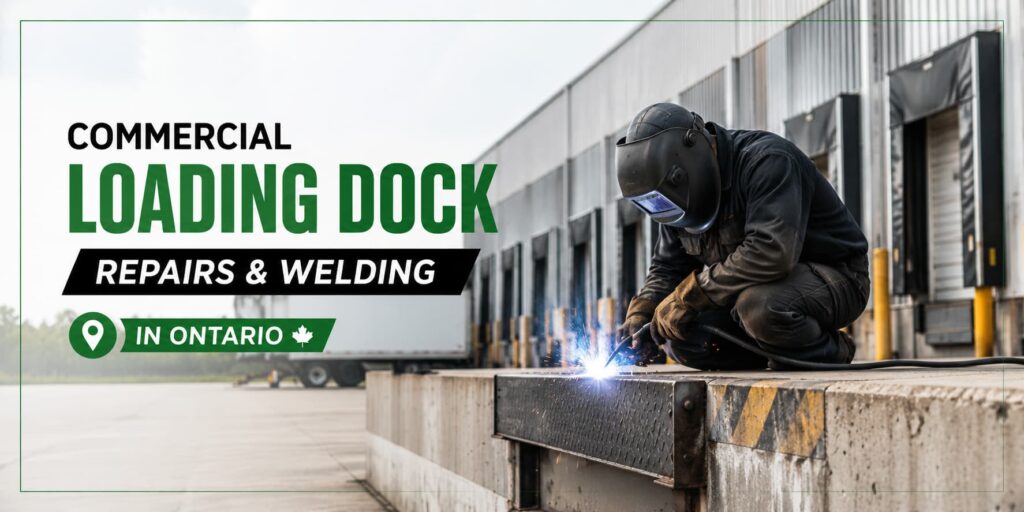
The biggest consideration is often equipment availability and suitability for the working environment. A repair inside a facility may require different tools from work performed on an exposed construction site. For businesses dealing with machinery, loading docks, steel structures or industrial equipment, see industrial welding services.
Best Welding Supplies for Mobile Welders in Canada
Mobile welding presents different equipment challenges from fixed workshop fabrication. Welders must transport their equipment, prepare work areas and complete repairs in locations that may have limited electrical access or difficult working conditions.
A mobile welding setup needs to balance portability, performance, safety and reliability.
Portable Welding Machines
Portable MIG, TIG and stick machines allow welders to perform selected repairs and fabrication work outside a permanent workshop.
When choosing a portable welder, consider:
- Machine weight and dimensions.
- Available input power.
- Generator compatibility, where applicable.
- Output amperage and duty cycle.
- Cable and torch length.
- Environmental protection and storage requirements.
A lightweight machine is useful only if it can deliver the required output for the intended job.
Welding Generators
Generator-powered welding systems can provide flexibility when grid power is unavailable.
Check the machine manufacturer’s requirements for generator sizing, voltage stability and power quality. Do not assume that a generator’s advertised peak wattage is sufficient for continuous welding operation.
Other electrical equipment, such as grinders and lighting, may also increase the power demand.
Mobile Tool Storage
An organized storage system reduces setup time and helps prevent equipment damage during transport.
Consider dedicated storage for:
- Welding leads and extension cables.
- Torches and consumables.
- Electrodes and filler rods.
- Clamps and measuring tools.
- Grinders and cutting accessories.
- PPE and fire-safety equipment.
- Gas cylinders and regulators.
Compressed gas cylinders require appropriate securing and handling. Follow supplier instructions and applicable transportation and workplace safety requirements.
On-Site Welding Equipment
Mobile welding jobs may involve repairing gates, railings, trailers, agricultural machinery, industrial components and steel structures.
The required equipment depends on the metal, joint design, material condition and accessibility of the repair.
For example, a trailer repair may require cutting and grinding equipment before welding can begin. A structural repair may require drawings, approved procedures and an inspection plan.
This is why mobile welders need more than a single welding machine. They need equipment that supports preparation, positioning, welding, inspection and safe site operations.
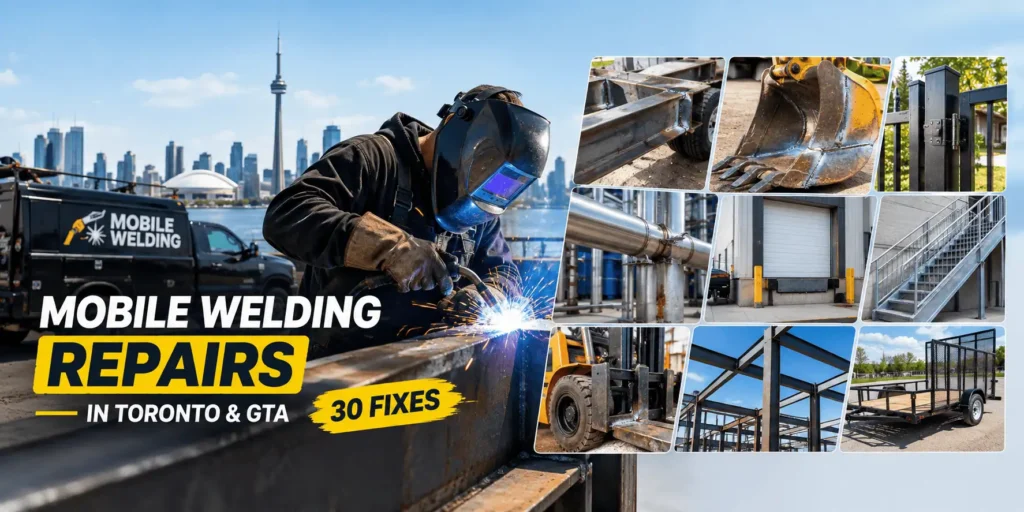
For GTA businesses and property owners who need professional assistance, Minhas Mobile Welding provides mobile welding, industrial welding, steel fabrication, trailer repairs and other on-site welding services.
Welding Equipment Trends to Watch in 2027 and Beyond
Welding technology continues to develop as manufacturers respond to changing production demands, workforce requirements and workplace safety expectations.
For Canadian welders, the next few years will likely bring greater attention to equipment efficiency, digital controls, automation and portable systems.
These developments are worth considering when planning future equipment purchases.
1. Inverter-Based Welding Technology
Inverter welding machines have become an important part of modern welding equipment.
They use electronic power conversion to control welding output and can offer compact designs, adjustable settings and improved portability compared with many traditional transformer-based machines.
For contractors and fabrication businesses, portability can be especially useful when equipment needs to move between workshops and job sites.
However, inverter technology does not automatically mean better performance. Buyers should still compare output stability, duty cycle, serviceability, input requirements and manufacturer support.
2. Digital Controls and Smart Welding Machines
Digital welding machines provide more precise control over parameters such as voltage, amperage, wire-feed speed and pulse settings.
Some advanced machines also offer:
- Stored welding programme
- Process-specific setup assistance.
- Digital parameter monitoring.
- Error and maintenance alerts.
- Connectivity and production data tracking.
These features can help standardize settings across jobs and support repeatable production.
However, operators still need the technical knowledge to select the correct process, consumables and welding parameters. Digital presets cannot replace an approved welding procedure or qualified operator.
3. Robotic and Automated Welding
Automation is becoming increasingly relevant to high-volume manufacturing and repetitive fabrication.
Robotic welding systems can perform programmed welding operations with consistent movement and repeatability when the workpiece, fixtures and process are properly controlled.
Potential applications include:
- Repetitive steel fabrication.
- Automotive component manufacturing.
- Industrial production.
- Standardized metal assemblies.
- High-volume welding operations.
Automation is not suitable for every workshop. Initial investment, programming, fixtures, production volume and maintenance requirements all influence whether it makes financial sense.
For smaller businesses, collaborative robotic systems and more accessible automation equipment may become increasingly relevant as the technology develops.
4. Improved Welding Fume Management
Workplace exposure control will remain a major consideration for welding businesses.
Modern extraction systems, fume extraction guns, portable extraction units and improved ventilation designs can help capture contaminants closer to their source.
The Canadian government’s guidance on welding hazards discusses the importance of ventilation, maintenance and suitable exposure controls. It also explains how fume composition varies according to the process and materials being welded.
Businesses planning new welding equipment should consider fume management as part of the purchase rather than treating it as a separate issue.
5. Portable and Energy-Efficient Equipment
Mobile fabrication, maintenance and remote repair work create demand for equipment that is easier to transport and operate.
Manufacturers will continue to have opportunities to improve machine weight, power efficiency, generator compatibility and equipment integration.
For mobile welders, these developments may help reduce transport challenges and improve job-site flexibility.
Still, buyers should evaluate actual output and operating requirements rather than assuming smaller equipment can handle every industrial application.
6. Greater Use of Digital Quality Assurance
Digital documentation and production monitoring can help fabrication businesses maintain better records.
Potential applications include:
- Recording welding parameters.
- Tracking consumable usage.
- Monitoring machine performance.
- Managing maintenance schedules.
- Supporting inspection documentation.
- Maintaining traceability records.
These capabilities can become particularly useful when businesses handle multiple projects with different material and quality requirements.
What this means for buyers: When purchasing equipment for 2027 and beyond, consider whether it supports future workflow requirements. Digital controls, serviceability, replacement parts, compatibility and maintenance support may matter more over time than a long list of advertised features.
Choosing Reliable Welding Supplies Supplier in Canada
Finding a reliable supplier is just as important as selecting the right welding equipment. A good supplier should help you identify compatible products, understand technical specifications and access replacement components when needed.
Before placing an order, consider the following factors.
- Product range: Look for suppliers offering welding machines, electrodes, filler metals, shielding gases, PPE, cutting accessories and replacement parts.
- Technical support: Check whether the supplier can help you select equipment based on material type, thickness, welding process and operating conditions.
- Certification documentation: For regulated applications, request documentation confirming the relevant consumable classifications and certifications. Do not rely solely on product descriptions or marketing claims.
- Replacement parts availability: Confirm that essential components such as contact tips, liners, nozzles, torch assemblies and drive rolls are available.
- Warranty and repairs: Review warranty coverage, service arrangements and the availability of authorized repair support.
- Shipping and delivery: Canadian buyers should consider delivery costs, shipping times, regional availability and the handling requirements of compressed gas cylinders.
- Total cost of ownership: Compare the initial purchase price with consumable costs, maintenance, energy requirements, replacement parts and expected operating demands.
A machine with a lower purchase price may become more expensive if it requires frequent repairs or uses difficult-to-source consumables.
How to Maintain Welding Equipment and Extend Its Working Life
Even quality welding equipment requires regular maintenance. Poor maintenance can cause inconsistent performance, unnecessary downtime and avoidable replacement costs.
A preventive maintenance routine helps identify problems before they interrupt work.
Welding Machine Maintenance
Inspect welding machines regularly for:
- Damaged power cables and connectors.
- Loose electrical connections.
- Blocked cooling vents.
- Excessive dust accumulation.
- Unusual operating noise.
- Damaged switches and controls.
- Signs of overheating.
Follow the manufacturer’s instructions for cleaning and inspection. Disconnect power before performing maintenance that requires opening or accessing electrical components. Electrical repairs should be handled by qualified personnel.
Torch and Wire Feeder Maintenance
For MIG equipment, regularly inspect the torch assembly, contact tips, gas nozzle, liner and drive rolls.
Poor wire feeding can result from a worn liner, incorrect drive-roll tension, damaged wire or unsuitable consumable components.
Keep the wire path clean and replace worn parts when necessary.
For TIG equipment, inspect the torch, collet, collet body, ceramic cup and tungsten electrode.
Consumable Storage
Store welding electrodes, filler rods and wires according to manufacturer recommendations.
Protect moisture-sensitive electrodes from humidity and contamination. Use suitable storage ovens or holding equipment where required by the electrode classification and welding procedure.
Keep filler metals identified and separated to prevent accidental mixing.
Gas Cylinder and Regulator Inspection
Inspect cylinders, valves, regulators, hoses and connections before use.
Secure cylinders upright using appropriate restraints. Keep them away from heat, physical damage and incompatible materials.
Follow supplier instructions for cylinder storage, transportation and handling. Never attempt to repair a damaged cylinder valve or regulator yourself.
Grinding and Cutting Tool Maintenance
Inspect grinders, guards, handles, cables and abrasive discs before use.
Replace damaged discs and accessories. Keep guards installed and use only accessories rated for the tool’s operating speed.
Proper maintenance helps reduce equipment failures and supports safer working conditions.
Frequently Asked Questions
What are the essential welding supplies for beginners in Canada?
Beginners generally need a suitable welding machine, welding helmet, gloves, flame-resistant clothing, safety glasses, clamps, measuring tools, grinding accessories and process-specific consumables.
A stick welding setup can be a practical starting point for certain basic steel applications. MIG equipment may suit beginners who want to work on general fabrication projects. The best starting equipment depends on the materials, available power supply and intended work.
Which welding machine is best for professional use?
There is no single welding machine that suits every professional application. MIG machines are useful for general fabrication and production work. TIG machines offer precise control for stainless steel and aluminium applications.
Stick machines are practical for many construction and maintenance jobs, while flux-cored equipment can support suitable outdoor and heavy fabrication applications. Professional buyers should compare output, duty cycle, process compatibility, reliability and service support.
What is the difference between MIG, TIG and stick welding equipment?
MIG welding uses a continuously fed wire electrode and typically requires shielding gas when using solid wire.
TIG welding uses a non-consumable tungsten electrode and may require a separate filler rod.
Stick welding uses a flux-coated consumable electrode that provides shielding during the welding process.
Each process has different equipment requirements, operating characteristics and suitable applications.
How much do welding supplies cost in Canada?
Welding supply costs vary considerably depending on equipment specifications, brand, consumable classification and application.
A basic workshop setup will generally cost less than an industrial fabrication inventory containing production welding machines, extraction systems, plasma cutters and specialized fixtures.
Other expenses include shielding gases, filler materials, replacement parts, PPE, maintenance and electrical requirements.
Compare the total cost of ownership rather than choosing equipment based solely on its advertised price.
Which welding process is best for outdoor work?
Stick welding and suitable self-shielded flux-cored welding are often practical choices for outdoor applications because they do not rely on external shielding gas to protect the weld pool.
However, the appropriate process depends on the material, joint requirements, wind conditions and applicable welding procedure.
Gas-shielded processes may still be suitable when environmental conditions can be controlled.
Are multi-process welding machines worth buying?
Multi-process machines can be worthwhile for contractors, maintenance teams and smaller fabrication businesses that handle different welding applications.
They reduce the need to transport or maintain several dedicated machines.
However, check the output and duty cycle for each process. A multi-process machine may not provide the production capacity required for demanding industrial work.
What welding safety equipment is required?
Common welding PPE includes an appropriately rated welding helmet, safety glasses, welding gloves, flame-resistant clothing and suitable protective footwear.
Depending on the task, additional protection may include respirators, hearing protection, welding screens and face shields.
Ventilation and fume extraction must also be considered. PPE selection should follow a workplace hazard assessment and applicable provincial or federal requirements.
Why are CWB-certified welding consumables important?
CWB-certified consumables provide independent assurance that specific welding electrodes and filler metals meet the applicable certification requirements.
Certain Canadian fabrication applications require consumables meeting CSA W48 or other applicable standards.
Always confirm the actual certification status of the product and its manufacturing source.
What tools should a mobile welder carry?
A mobile welder typically needs a suitable portable welding machine, welding leads, clamps, grinders, measuring tools, torches, consumables and safety equipment.
Depending on the job, additional equipment may include a generator, plasma cutter, extension cables and material-handling tools.
The final inventory should reflect the welding processes, materials and conditions encountered on site.
Final Thoughts
The best welding supplies and tools in Canada are the ones that match your materials, working conditions, production requirements and safety obligations. A professional setup needs more than a capable welding machine. Suitable consumables, reliable hand tools, accurate measuring equipment, proper PPE and regular maintenance all contribute to consistent results.
As the industry moves towards 2027 and beyond, digital controls, automation, portable equipment and improved fume extraction will continue to influence equipment decisions. Canadian welders and fabrication businesses should consider these developments when planning future purchases.
However, newer technology should not replace the fundamentals. Correct material selection, qualified operators, suitable welding procedures and proper inspection remain essential for reliable fabrication.
For businesses and property owners who need welding work rather than equipment purchases, choosing an experienced welding contractor can be the more practical option.
Need professional welding or metal fabrication in the Greater Toronto Area? Call: (905) 699-7699 | Contact the team to discuss your welding requirements and request a quote.