A contractor shows up on site. The welds look clean. The job gets signed off. Six months later, cracks appear, and suddenly everyone’s asking one question: was this shop even certified? That’s where CSA W47.1 stops being “just paperwork” and starts becoming your biggest protection.
So, What Is CSA W47.1 Exactly?
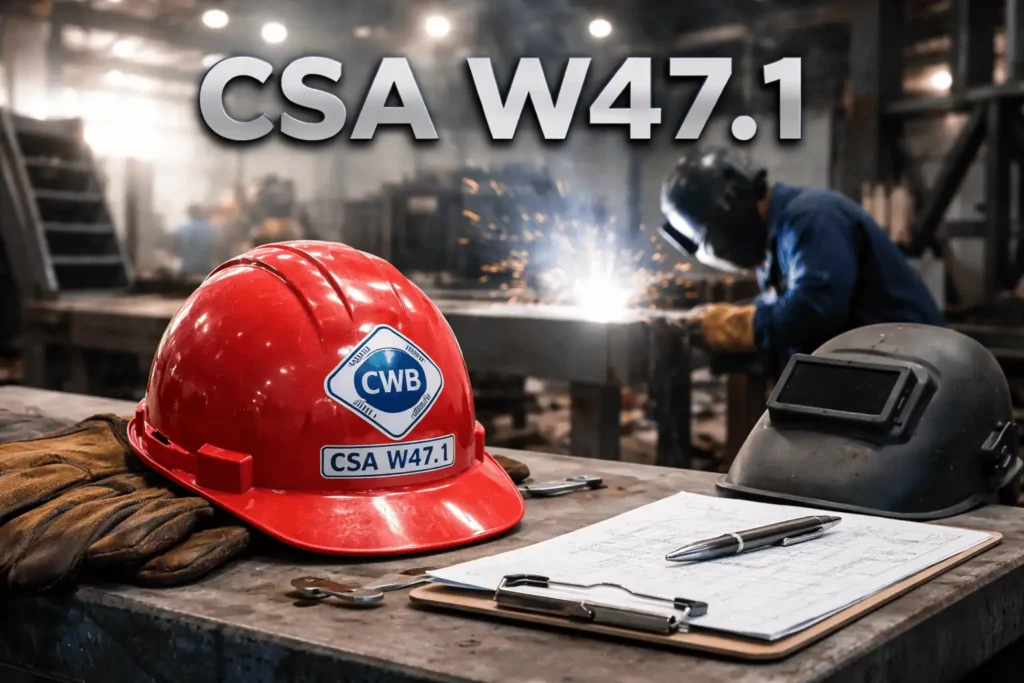
CSA W47.1 is a Canadian certification standard for companies that perform fusion welding of steel structures.
Simple version: It proves a welding company isn’t just “good at welding”, it’s qualified, inspected, and accountable under strict national rules. This certification is issued by the Canadian Welding Bureau (CWB). And it’s not a one-time badge. In Ontario, welding companies have to maintain it continuously through audits, qualified personnel, and documented procedures.
If you’re hiring a welding service in GTA, this standard is the line between:
- “Looks fine”
- And “Meets structural code and liability requirements”
Why Ontario Property Owners and Contractors Should Care
If you’re managing a commercial property, overseeing construction, or even handling structural repairs, you’re on the hook for what gets built. And here’s the uncomfortable truth: If a weld fails and the contractor wasn’t CSA W47.1 certified, liability can shift back to you.
That includes but not limited to:
- Structural failure claims
- Insurance complications
- Delays due to failed inspections
- Costly rework
This isn’t theoretical. It happens more often than people think, especially in smaller jobs where certification gets overlooked.
What CSA W47.1 Certification Actually Covers
CSA W47.1 isn’t just about the welder. It evaluates the entire company system.
That includes:
1. Qualified Welders
Every welder must pass testing for specific processes and positions. No guessing. No “learned on the job” shortcuts.
2. Approved Welding Procedures
The company must follow documented procedures for every type of weld. These are reviewed and approved, not improvised on-site.
3. Welding Supervision
There must be a certified welding supervisor or engineer overseeing the work. Someone accountable.
4. Ongoing Audits
CWB conducts regular audits. If standards slip, certification can be suspended.
In other words, it’s not just skill, it’s consistency, traceability, and compliance.
2026 Reality: Why This Matters More Now
Things have shifted over the past few years. More municipalities and project owners in Ontario are tightening requirements. What used to be “recommended” is now often mandatory.
Here’s what’s changed:
- Insurance providers are stricter
- Claims tied to uncertified work are getting denied or delayed.
- Inspections are tighter
- Failed inspections now mean real delays, not just minor fixes.
- Liability awareness is higher
- Property managers and developers are asking more questions before approving vendors.
- More competition, mixed quality
- The number of small welding operators has grown, but not all follow certified standards.
In short: skipping certification to save money is getting riskier every year.
The Cost Difference: Certified vs Non-Certified
Let’s address the obvious concern.
Yes, CSA W47.1-certified companies may charge more upfront.
But here’s how that usually plays out:
Non-certified work:
- Lower initial quote
- Higher risk of rework
- Possible inspection failure
- Legal exposure if something goes wrong
Certified work:
- Slightly higher upfront cost
- Work passes inspection faster
- Documentation protects you
- Long-term reliability
You’re not just paying for welding. You’re paying for certainty.
Where CSA W47.1 Applies (And Where People Miss It)
Most people assume certification only matters for large construction projects.
That’s not true.
You’ll want CSA W47.1-certified work for:
- Structural steel repairs
- Load-bearing modifications
- Staircases, railings, and platforms (especially commercial)
- Industrial equipment welding
- Any job requiring inspection or permit approval
Where people often skip it:
- “Small” repairs that turn structural
- Property upgrades without permits
- Emergency fixes where speed beats due diligence
That’s where problems start.
What Happens If You Ignore It
Let’s say you go with a non-certified welder to save money.
Best-case scenario? The job holds up.
Worst-case scenario?
- The weld fails under load
- You fail a building inspection
- You redo the entire job
- Insurance disputes slow everything down
And if there’s injury or damage involved, it escalates fast. The real cost isn’t the weld. It’s everything that happens after.
How to Verify a Welding Company (Don’t Just Take Their Word)
Anyone can say they follow standards. Verification is simple, and you should always do it.
Ask for:
- Current CSA W47.1 certification proof
- Scope of certification (what types of welding they’re approved for)
- Confirmation of CWB registration
A legitimate company won’t hesitate. If they dodge the question, that’s your answer.
Where Minhas Mobile Welding Fits In
When you’re hiring for structural or code-sensitive work, you need more than availability, you need compliance.
Minhas Mobile Welding operates with a focus on:
- CSA W47.1 certified welders
- Code-compliant welding practices
- On-site flexibility for urgent jobs
- Professional-grade equipment and execution
- Work that aligns with Canadian standards and inspection requirements
Mobile service is convenient. Certified work makes it reliable.
You want both.
When Certification Might Not Be Critical
Not every job needs CSA W47.1-level oversight.
If you’re dealing with:
- Decorative metalwork
- Non-structural repairs
- Temporary fixes
You may not need full certification.
But the moment a weld affects load, safety, or compliance, that changes.
When in doubt, assume it matters, because inspectors and insurers usually will.
The Bottom Line
CSA W47.1 isn’t red tape.
It’s a filter.
It separates:
- Verified professionals from guesswork
- Compliant work from risky shortcuts
- Jobs that pass inspection from jobs that come back to haunt you
In 2026, that gap is only getting wider.
Thinking About a Welding Project?
Before you move forward, get clarity. Ask what standard your project requires. Ask if your contractor meets it. And if you’re unsure, start with a quick conversation.
The easiest next step is simple: Reach out to Minhas Mobile Welding and get a straight answer on what your project actually needs, and what it should cost to do it right.
Frequently Asked Questions
Can a welder be skilled but still not meet CSA W47.1 requirements?
Yes, and it happens often. A welder might have years of hands-on experience, but without working under a CSA W47.1-certified company, their work may not meet code requirements. The certification is about the *entire system*, not just individual skill.
Does CSA W47.1 certification expire, or is it permanent?
It’s not permanent. Companies must maintain compliance through ongoing audits and updates. If they fail to meet standards, their certification can be suspended or revoked, so “once certified” doesn’t mean “always certified.”
Will building inspectors actually check for CSA W47.1 on small jobs?
More than you’d expect. This current year, inspectors are increasingly asking for documentation even on mid-sized and renovation projects, especially when structural steel is involved. It’s no longer limited to large commercial builds.
Can using a non-certified welder delay my project timeline?
Oftentime, yes, and it’s one of the most common hidden delays. If your work fails inspection or requires verification, you may need to redo welds under a certified company, which adds days—or weeks—to your timeline.
Is CSA W47.1 required for insurance claims to be approved?
Not always required upfront, but it becomes critical after something goes wrong. Insurance providers may investigate whether the work met recognized standards—and lack of certification can complicate or reduce payouts.
Does mobile welding change anything about certification requirements?
No. Whether the work is done in a shop or on-site, CSA W47.1 standards still apply if the weld is structural or code-related. Mobile convenience doesn’t replace compliance.
Can I request partial certified work (only for critical welds)?
Technically yes, but it’s risky. Mixing certified and non-certified work on the same project can create accountability gaps. If something fails, it becomes harder to prove which part met standards, and that can backfire during inspections or claims.