When designing a steel-framed building, bridge, or industrial structure, one of the most critical decisions engineers and fabricators face is the choice between welded connections and bolted connections. This isn’t just a technical nuance; it’s a foundational choice that impacts structural integrity, project timeline, long-term maintenance, and overall cost. The question, “Which is stronger?” is more complex than it seems. The true answer lies in understanding the context: stronger for what?
In this definitive guide, let us explore into the science, practical experience, and economic factors that define the welded vs. bolted structural steel debate. By the end, you’ll have a clear, expert-backed understanding to inform your next structural steel fabrication project.
Welded vs. Bolted Structural Steel: A Comprehensive Guide to Strength, Cost, and Best Applications
The Core of the Debate: Understanding Connection Types
Before comparing strength, we must define our terms. In steel construction, connections are the points where beams, columns, and bracing elements meet.
What Are Welded Connections?
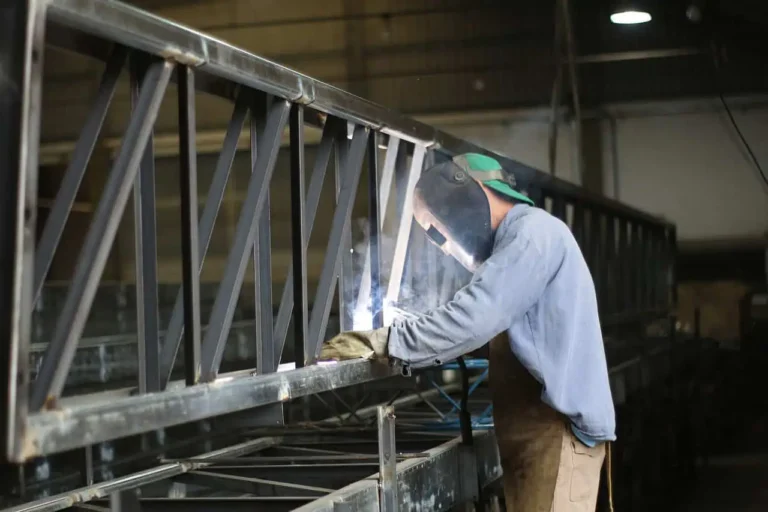
Welded connections fuse steel members together using intense heat, melting the base metals and often adding a filler material. This creates a continuous, monolithic joint. Common types include fillet welds, groove welds, and slot welds. The strength of a weld depends on the weld size, type, electrode used, and the skill of the certified welder you hire for the jobs.
What Are Bolted Connections?
Bolted connections use high-strength bolts (like A325 or A490) to clamp steel members together, often through pre-drilled holes with connecting plates or angles. The primary strength comes from clamping force and shear resistance. Types include bearing-type connections and slip-critical connections, the latter designed to prevent any movement under load.
The Strength Showdown: A Multi-Dimensional Analysis
“Stronger” can mean ultimate tensile strength, fatigue strength, stiffness, or resilience. Let’s break it down.
Ultimate Load-Bearing Capacity
In a perfectly executed, full-penetration weld, the connection can be as strong as or stronger than the base materials themselves. This means the steel will fail before the weld does. This gives welded steel structures a theoretical advantage in pure, static load capacity, as they create a direct, continuous force path.
Bolted connections, using modern high-strength bolts, are exceptionally strong and designed to be. However, their capacity is limited by the strength of the bolt and the bearing capacity of the connected plates. For many applications, this designed strength is more than sufficient and matches or exceeds the demands of the structure.
Expert Insight:
In a laboratory setting, a perfect weld can achieve the base metal’s full strength, making it incredibly strong in a static sense. However, ‘stronger’ in real-world engineering isn’t just about a peak number. It’s about predictable performance under dynamic loads, ease of inspection, and constructability. That’s where bolted connections often shine in practice.” – John Parker, P.E., Senior Structural Engineer with 25 years of experience.
Fatigue Strength and Dynamic Loading
This is a crucial differentiator. Welded joints, particularly at the toes of welds, can create stress concentrations and potential imperfections that become initiation points for fatigue cracks under repeated loading (think bridges, crane runways, vibrating machinery). This makes welded steel fabrication more susceptible to fatigue failure if not meticulously designed, executed, and inspected.
Bolted connections, especially slip-critical types, generally exhibit superior fatigue resistance. The clamping force distributes stress more evenly, and the lack of a rigid fusion zone reduces stress concentration. For structures subject to vibration or cyclic loads, bolting is often the preferred choice.
Stiffness and Rigidity
Welded connections are inherently rigid (or “moment connections”). They transfer bending moments between members, creating a stiffer, more fixed frame. This is essential for tall buildings resisting wind loads or structures requiring minimal deflection.
Standard bolted connections are often “pinned” or “simple” connections, designed to transfer shear but not moment, allowing for some rotation. However, moment-resisting bolted connections using extended end-plates are also common and can be designed for high rigidity. The choice here is more about design intent than an inherent property.
Comparative Strength Table
| Characteristic | Welded Connections | Bolted Connections |
|---|---|---|
| Ultimate Static Strength | Very High (can match base metal) | High (dependent on bolt grade & design) |
| Fatigue Strength | Lower (stress concentrations at weld toe) | Higher (excellent for dynamic loads) |
| Connection Rigidity | High (ideal for moment frames) | Variable (from simple shear to full moment) |
| Impact/Toughness | Good (if proper procedures & materials used) | Excellent (energy absorption through bolt elongation) |
| Failure Mode | Often brittle if improperly executed | More ductile, can show warning signs |
Beyond Strength: The Critical Practical Factors
Strength on paper is meaningless without considering real-world execution. Here’s where the balance often tips.
Cost and Labor Considerations
- Welding: Requires highly skilled, certified welders, specialized equipment, and controlled conditions (weather can halt field welding). It is labor-intensive and time-consuming. The cost of steel welding services includes consumables (electrodes, gas), power, and rigorous testing.
- Bolting: Generally faster for erection. Components are prefabricated in the fabrication shop (where welding is efficient) and simply assembled on-site with common tools. This reduces expensive field labor time and weather dependencies, often leading to lower total project costs.
Quality Control and Inspection
- Welding: Quality is highly dependent on welder skill and environmental conditions. Inspection is critical but can be complex, requiring non-destructive testing (NDT) like ultrasonic or X-ray testing to verify internal integrity. Defects like slag inclusions or porosity can be hidden.
- Bolting: Inspection is more straightforward. It involves verifying bolt grade, checking torque or turn-of-nut tightening, and ensuring proper installation. The quality is more consistent and easily verifiable.
Flexibility and Future Modifications
This is a major advantage for bolting. Bolted steel structures are easier to disassemble for modification, expansion, or even relocation. Welded structures are permanent; changes require cutting and re-welding, which is costly and can compromise the surrounding material.
Material and Design Considerations
Welding can affect the metallurgy of the steel, especially in the Heat-Affected Zone (HAZ), potentially weakening it if not controlled. Certain steels require pre-heating and specific procedures. Bolting avoids these thermal effects entirely.
So, Which Is Stronger? The Contextual Verdict
When to Choose Welded Connections:
- For maximum static, continuous strength in rigid frames (e.g., high-rise moment frames, monolithic industrial plants).
- When aesthetics or aerodynamics matter, you can grind welded connections smooth to create a clean, seamless appearance.
- For certain types of plate work like tanks, pressure vessels, or ship hulls where water/air-tight integrity is required.
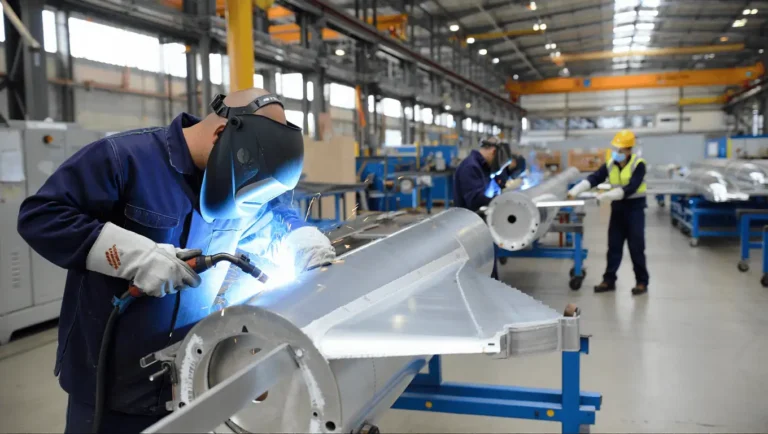
- In shop fabrication where conditions are controlled, and automated welding can be used for efficiency and quality.
When to Choose Bolted Connections:
- For structures with high fatigue or dynamic loads (e.g., bridges, crane supports, earthquake-resistant frames in some designs).
- When speed of erection and reduced field labor cost are priorities.
- For structures requiring future adaptability,
- In harsh field conditions where welding would be difficult (cold, windy, wet weather).
- When quality inspection needs to be simple and definitive.
The trend in modern steel construction is a hybrid approach: utilize the efficiency and quality of shop welding to create large, complex components (like welded beam-column units), and then use high-strength bolting to connect these assemblies rapidly and reliably in the field.
FAQ: Your Welded vs. Bolted Questions, Answered
Are welded structures cheaper than bolted ones?
Not typically. While welding material costs might be lower, the high skilled labor cost, slower erection speed, and rigorous inspection often make welded structures more expensive overall, especially for field connections.
Can you combine welding and bolting on the same project?
Absolutely. This is considered best practice in modern steel fabrication. “Shop-weld, field-bolt” is a standard mantra. It leverages the strengths of each method: quality welding in a controlled shop environment and fast, reliable bolting on-site.
Which connection type is more common in commercial building construction?
For typical commercial buildings (office parks, warehouses), prefabricated steel with bolted connections dominates due to its speed, cost-effectiveness, and ease of modification for future tenants.
Is welding or bolting better for seismic (earthquake) zones?
This is nuanced. Both are used. The key is ductility-the ability to deform without breaking. Properly detailed bolted connections can offer excellent ductility. Welded connections require special detailing (like using specially designed welded moment frames with reinforced connections) to ensure ductile behavior. Following current seismic codes (like AISC 341) is paramount for either choice.
How do I decide for my specific project?
Consult with a professional structural engineer and an experienced steel fabrication company near you early in the design phase. The decision should be based on load requirements, budget, timeline, and long-term use.
Conclusion: It’s Not About Stronger, It’s About Smarter
The debate between welded and bolted structural steel isn’t a contest with a single winner. Welded connections can achieve incredible continuity and strength, while bolted connections offer unparalleled predictability, speed, and flexibility.
The smartest approach leverages the advantages of both through careful design and a “shop-weld, field-bolt” methodology. The ultimate strength of your project lies not in choosing one over the other, but in partnering with experts who understand how to apply each technique correctly.
Ready to Build with Confidence?
Whether you’re in the early planning stages of a new facility or need to modify an existing structure, choosing the right connection methodology is critical.
Contact Minhas team of experienced steel fabrication specialists today for a consultation. We’ll analyze your project’s specific needs for load, budget, and timeline to recommend the strongest, most cost-effective solution. Let’s build something remarkable, together.
Get Your Free Project Assessment
Subscribe to our newsletter for more in-depth insights, case studies, and updates on the latest in steel construction and fabrication technology